
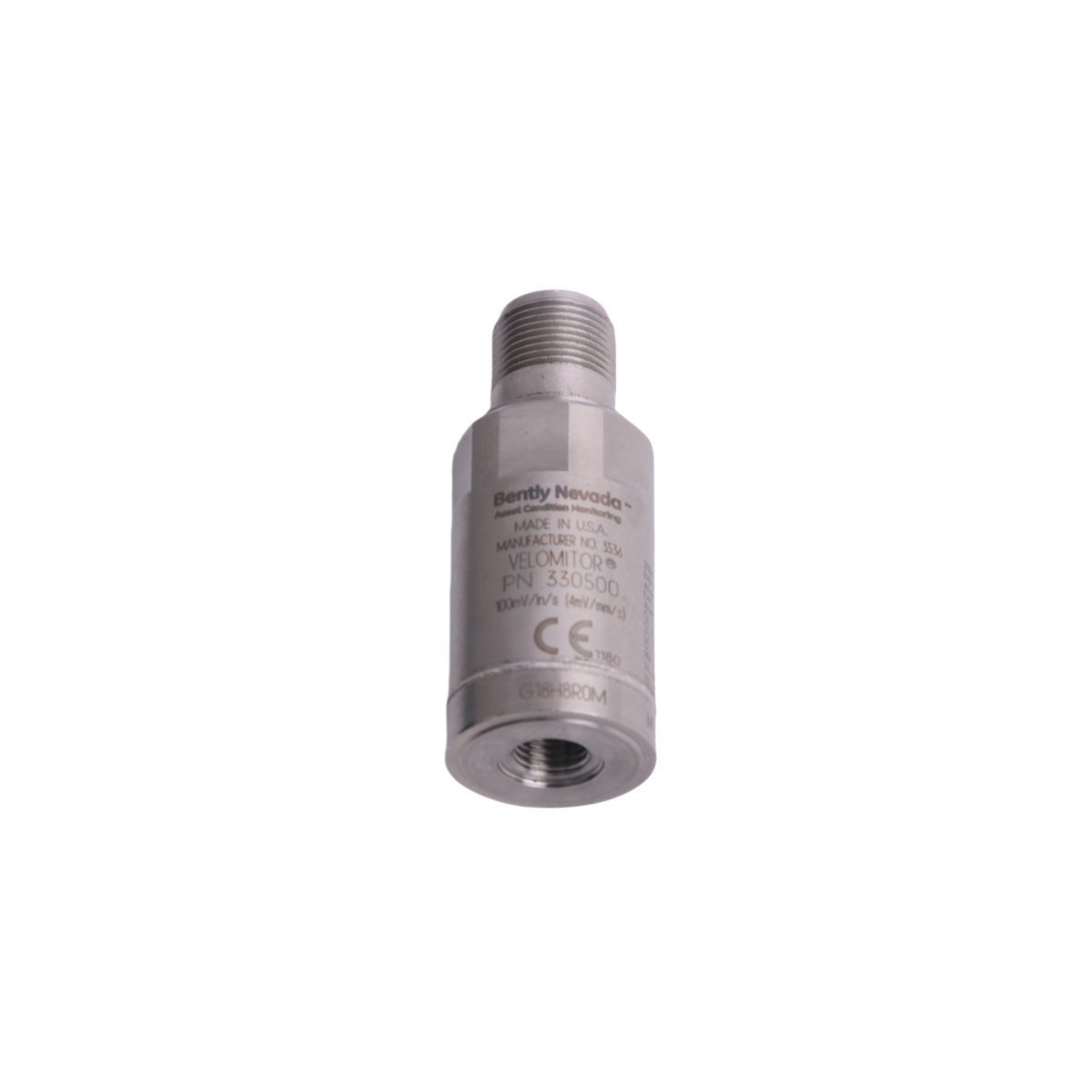
330500-03-04 Bently Nevada 3300 TSI Piezo-Velocity Sensors
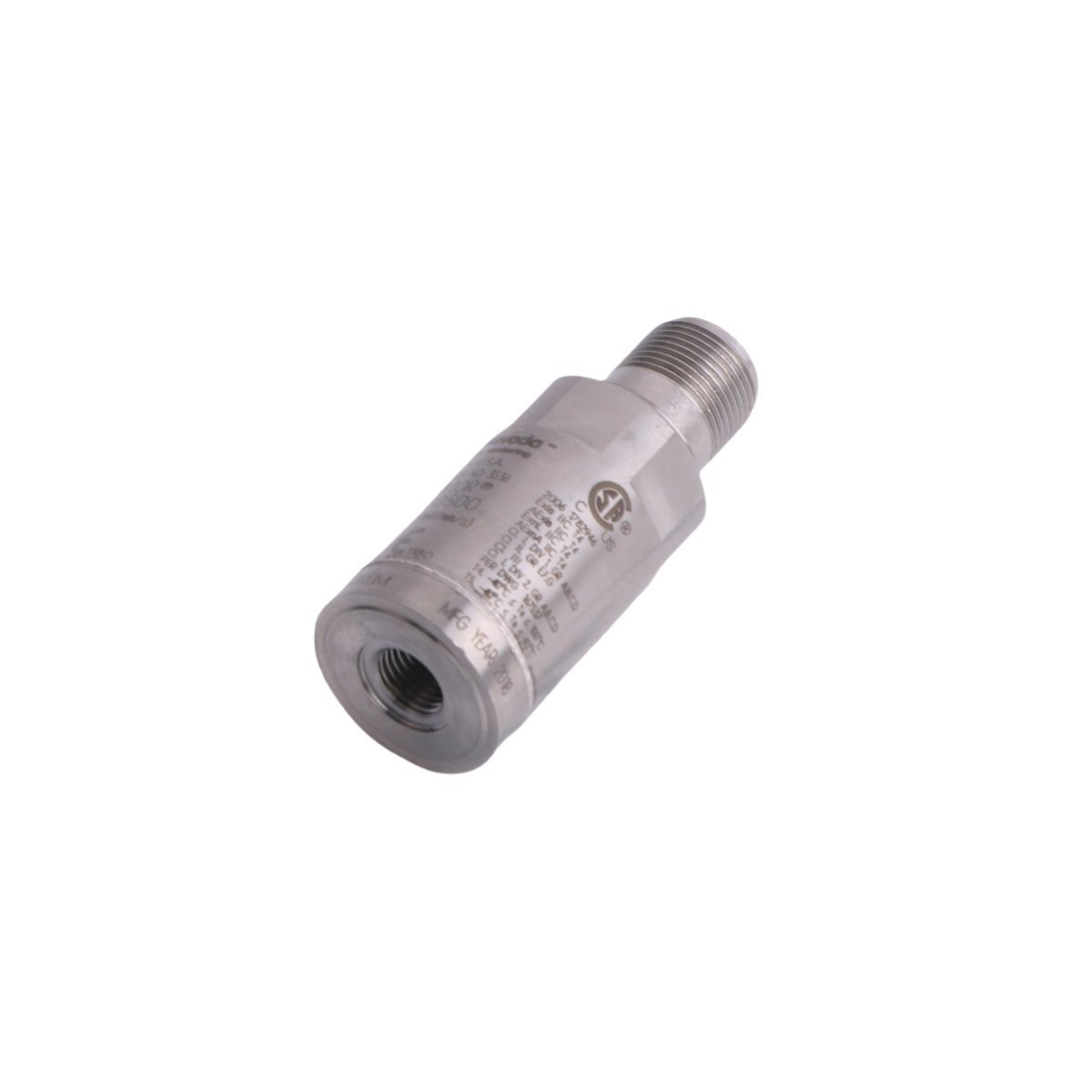
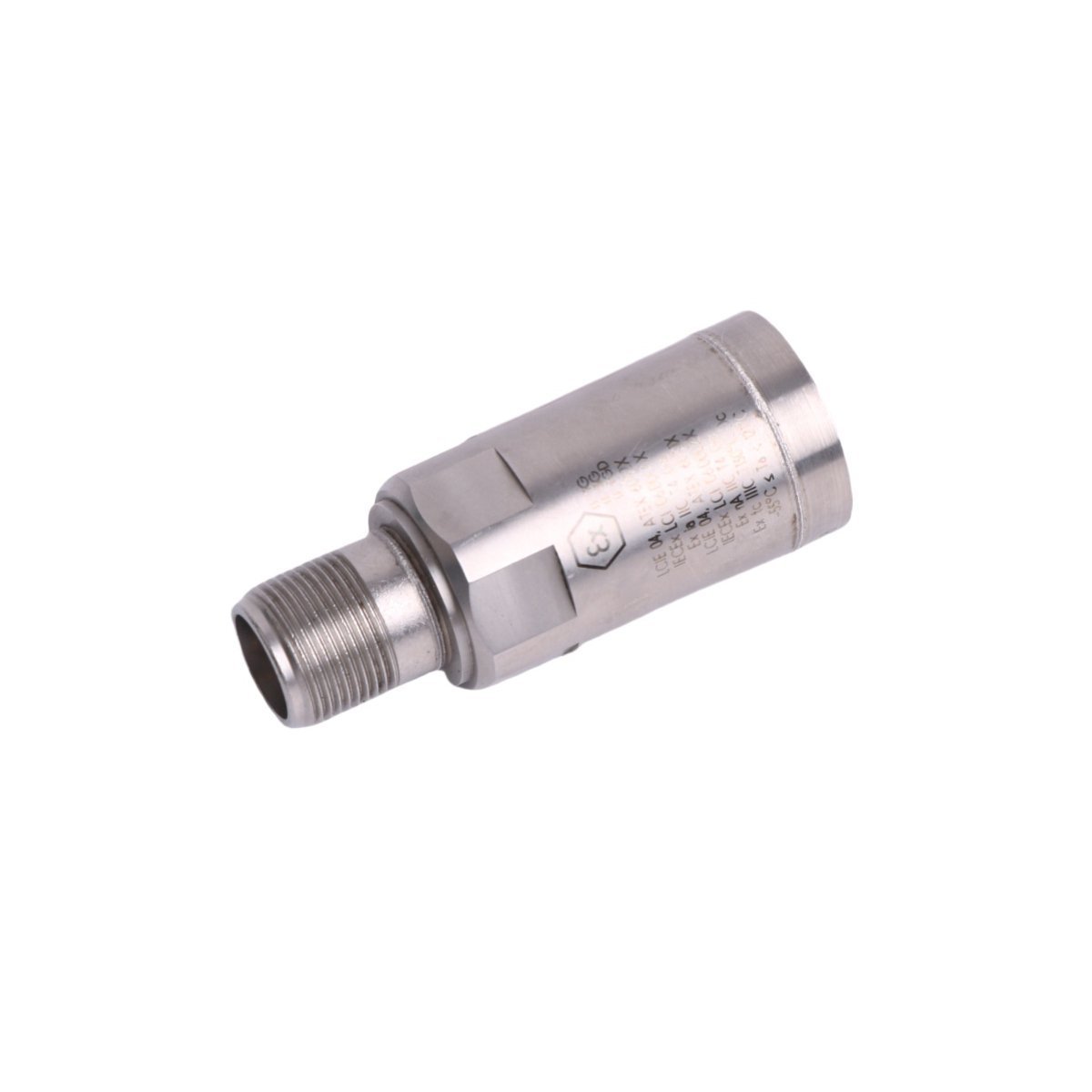
Sale!The Bently Nevada 330500-03-04 Piezo-Velocity Sensor measures absolute machinery casing vibration within TSI systems. Brand New, Original Stock, Global Shipping.
99 in stock


- Surface Preparation: The installer must machine a flat, smooth mounting surface on the bearing housing or casing wall. Surface irregularities reduce the high-frequency amplitude response and introduce false signals.
- Mounting Torque: Apply the manufacturer-specified torque rating to the mounting stud using a calibrated torque wrench. Insufficient torque limits frequency transmission, while excessive torque risks cracking the internal crystal assembly.
- Conduit Routing: Pass the interconnecting cable through rigid or flexible metal conduit networks. Ensure the conduit provides physical support and isolates the signal wire from adjacent high-voltage motor supply runs to suppress EMI.
- Shield Termination: Connect the outer drain wire of the shielded cable exclusively to the instrumentation common ground inside the TSI cabinet rack. Maintain isolation at the sensor end to prevent ground loop currents from corrupting the velocity signal.
Bently Nevada 330500-03-04 Piezo-Velocity Sensor
The Bently Nevada 330500-03-04, also cataloged as the 330500 Piezo-Velocity Sensor, operates as a dedicated hardware component for absolute vibration monitoring within Turbine Supervisory Instrumentation (TSI) networks. The device utilizes internal piezoelectric accelerometer elements paired with embedded integration electronics to measure absolute velocity on bearing housings, machine casings, or structural assemblies. The solid-state construction eliminates moving internal parts, preventing mechanical wear and degradation while tracking dynamic rotor casing variables.
Hardware Specifications
| Parameter | Specification |
|---|---|
| Model | 330500-03-04 |
| Brand | Bently Nevada |
| Origin | USA |
| Weight | 0.14 kg |
| Dimensions | 6.2 cm x 2.4 cm x 2.4 cm |
| Operating Temp | Standard industrial limits for TSI velocity sensors |
| Measurement Type | Absolute vibration velocity |
| Internal Element | Piezoelectric crystal with integrating amplifier |
| Mounting Orientation | Omnidirectional (vertical, horizontal, or angled) |
| System Integration | TSI / 3300 Proximity Transducer System platforms |
| Power Consumption | Handled via paired external monitor loop power |
Machinery Monitoring & TSI Characteristics
The internal electronic circuit performs real-time integration of the primary charge output from the piezoelectric crystal, executing direct conversions to yield a velocity parameter. This signal processing path enables precise tracking of casing vibration frequencies associated with rotor dynamics, exposing mechanical faults such as rotor unbalance and shaft misalignment. The device housing shields the internal electronics to maintain rigorous cross-talk suppression when field technicians route the sensor lines alongside proximity transducer cabling networks. This absolute velocity infrastructure establishes direct physical monitoring independent of proximity probes, capturing high-frequency transmission directly through the structural metal path.
Frequently Asked Questions
Q: How does the omnidirectional mounting capability affect internal component wear over continuous operation?
A: The solid-state design contains zero moving mass components or physical springs. Consequently, mounting the device at any angle does not induce mechanical drift or physical degradation in the internal sensing elements.
Q: Does this piezo-velocity sensor require external calibration when connected to a new TSI monitoring channel?
A: The factory pre-sets the baseline sensitivity metrics within the internal electronics block. Technicians configure the monitor channel settings to match the standard sensor scale factor, which eliminates the need for manual field loop calibration.
Q: Can the sensor operate properly if installed on a flexible, low-mass structural cover?
A: No, the sensor requires rigid mechanical coupling to a point where rotor vibration transmits faithfully to the casing. Installing the hardware on a low-mass or flexible structure introduces localized structural resonance, distorting the velocity response.
Field Installation Guidelines
| Weight | 0.14 kg |
|---|---|
| Country of Origin | USA |
| Dimension | 6.2 x 2.4 x 2.4cm |



Reviews
There are no reviews yet.